VPNs vs Proxies for Privacy Which is More Effective
Understand the differences between VPNs and proxies for online privacy. A comprehensive comparison to help you choose the right tool.
Understand the differences between VPNs and proxies for online privacy. A comprehensive comparison to help you choose the right tool.
VPNs vs Proxies for Privacy Which is More Effective
When you're looking to boost your online privacy and security, you've probably come across two main contenders: VPNs (Virtual Private Networks) and proxies. Both can help you mask your IP address and access geo-restricted content, but they operate very differently under the hood. Knowing these differences is crucial for choosing the right tool for your specific needs, especially if you're serious about protecting your digital footprint in regions like the USA and Southeast Asia.
Understanding Proxy Servers How They Work for Online Anonymity
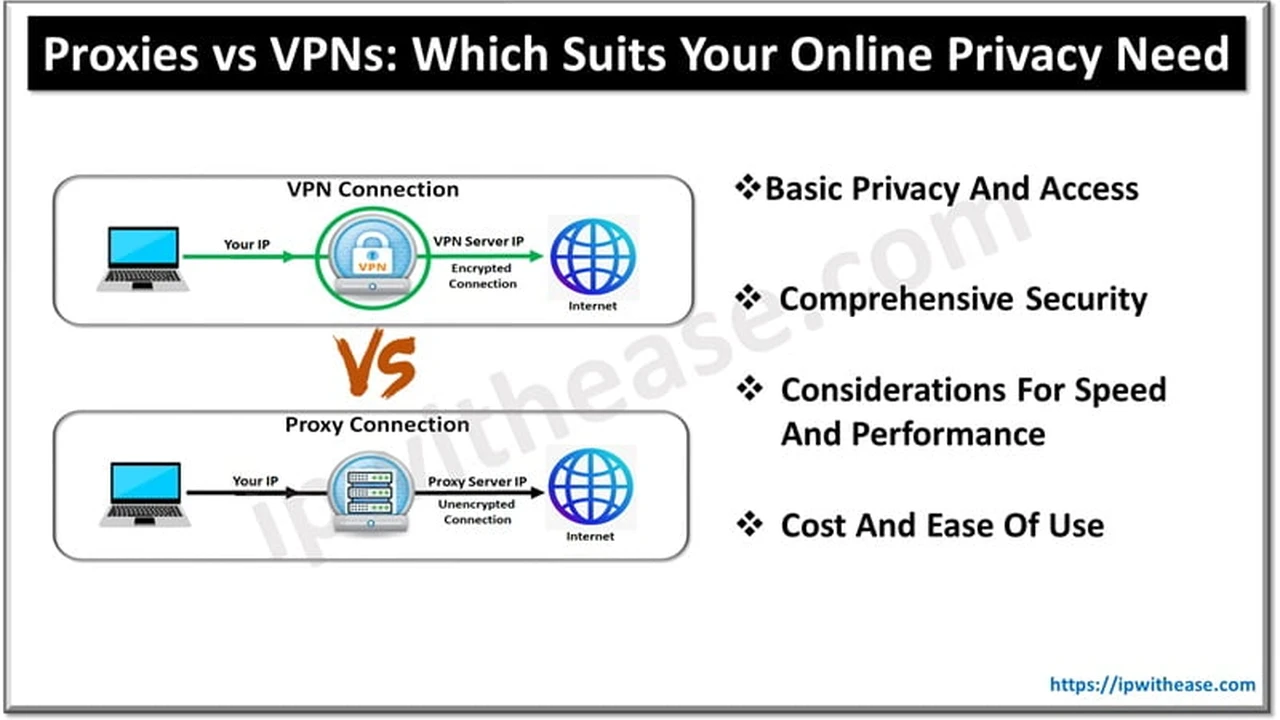
Let's start with proxy servers. Think of a proxy server as a middleman between your device and the internet. When you use a proxy, your internet traffic first goes to the proxy server, which then forwards your request to the website or service you're trying to reach. The website sees the proxy server's IP address instead of yours, giving you a layer of anonymity. Proxies typically operate at the application layer, meaning they only handle traffic for a specific application or browser. For example, you might configure your web browser to use a proxy, but your other applications (like a game client or email program) would still connect directly to the internet.
Types of Proxy Servers and Their Privacy Implications
There are several types of proxy servers, each with varying levels of anonymity and functionality:
- HTTP Proxies: These are designed specifically for web traffic (HTTP/HTTPS). They're great for browsing and accessing geo-restricted websites, but they don't encrypt your traffic. This means your ISP or anyone monitoring your network can still see what you're doing, even if they don't see your original IP address.
- SOCKS Proxies (SOCKS4/SOCKS5): SOCKS proxies are more versatile than HTTP proxies. They can handle any type of traffic, including web browsing, torrenting, and gaming. SOCKS5 is the more advanced version, offering better performance and some authentication features. However, like HTTP proxies, SOCKS proxies generally don't encrypt your data.
- Transparent Proxies: These are often used by organizations or ISPs to filter content or cache data. You might not even know you're using one, as they don't require any configuration on your part. They offer no privacy benefits and can even be used to monitor your activity.
- Anonymous Proxies: These proxies hide your IP address but might still identify themselves as a proxy. They offer a moderate level of anonymity.
- Elite Proxies: These are the most anonymous type of proxy. They hide your IP address and don't reveal that you're using a proxy at all, making it harder for websites to detect and block you.
Use Cases for Proxies: Proxies are often used for simple tasks like bypassing basic geo-restrictions for streaming (though many streaming services are getting better at detecting them), web scraping, or maintaining a degree of anonymity for casual browsing. They are generally faster than VPNs because they don't involve encryption overhead.
Exploring VPNs How They Secure Your Entire Connection
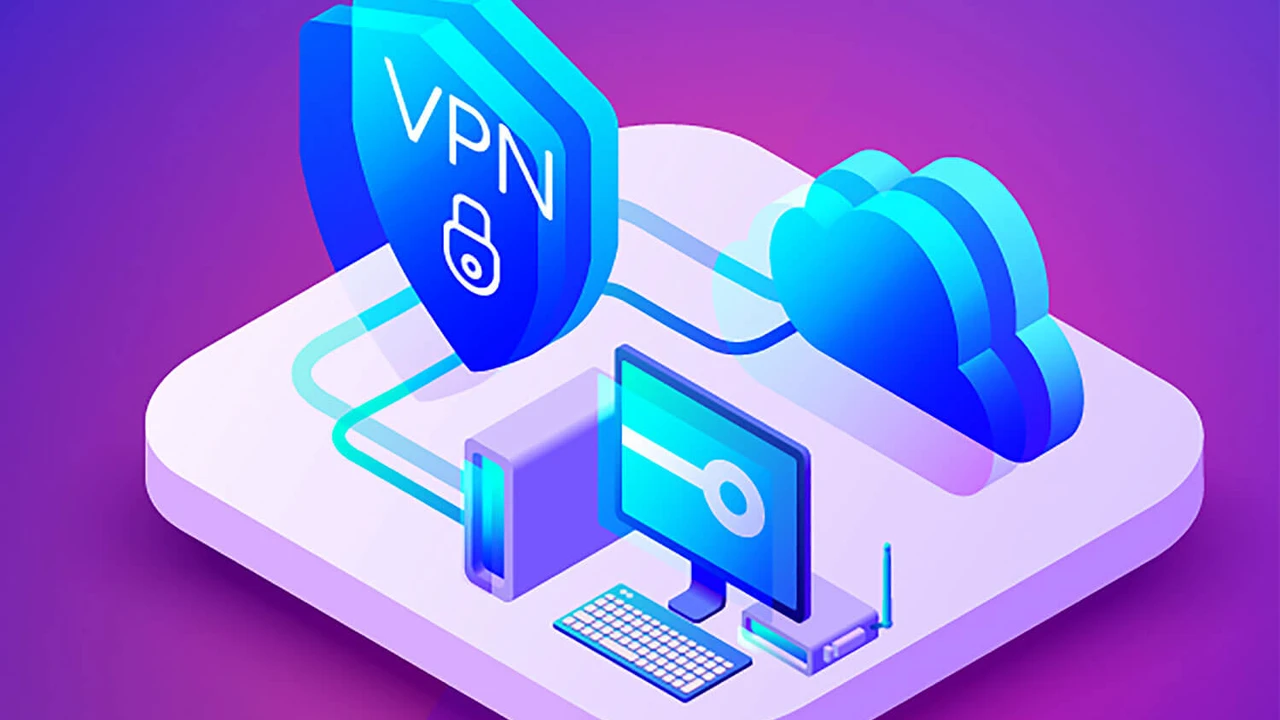
Now, let's talk about VPNs. A VPN creates an encrypted tunnel between your device and a VPN server. All your internet traffic, from all applications on your device, passes through this tunnel. This means your data is encrypted from your device to the VPN server, making it unreadable to your ISP, government agencies, or anyone else trying to snoop on your connection. Once your traffic reaches the VPN server, it then goes out to the internet, appearing to originate from the VPN server's IP address.
Key Features and Security Benefits of VPNs for Digital Privacy
VPNs offer a much more comprehensive privacy and security solution compared to proxies:
- End-to-End Encryption: This is the biggest differentiator. VPNs encrypt all your data, protecting it from eavesdropping. This is crucial when using public Wi-Fi networks, where your data is vulnerable.
- Full Device Protection: Unlike proxies that often work on an application-by-application basis, a VPN protects all internet traffic from your device. This includes web browsers, email clients, gaming apps, and any other software that connects to the internet.
- IP Address Masking: Similar to proxies, VPNs hide your real IP address, replacing it with the server's IP. This helps you bypass geo-restrictions and maintain anonymity.
- No-Log Policies: Reputable VPN providers adhere to strict no-log policies, meaning they don't record your online activities. This is a critical aspect of privacy that many free proxies lack.
- Kill Switch: A kill switch is a vital security feature that automatically disconnects your internet if the VPN connection drops. This prevents your real IP address and unencrypted data from being exposed.
- DNS Leak Protection: VPNs typically include DNS leak protection to ensure your DNS requests (which translate website names into IP addresses) are also routed through the encrypted tunnel, preventing your ISP from seeing your browsing history.
- Advanced Protocols: VPNs utilize robust protocols like OpenVPN, WireGuard, and IKEv2/IPsec, which offer strong encryption and security.
Use Cases for VPNs: VPNs are ideal for anyone serious about online privacy and security. This includes protecting sensitive data, bypassing censorship, securing public Wi-Fi connections, anonymous torrenting, and accessing geo-restricted streaming content reliably. They are particularly important for users in regions with strict internet surveillance or censorship, such as parts of Southeast Asia, or for those concerned about data privacy in the USA.
Direct Comparison VPN vs Proxy Key Differences for Users
Let's break down the core differences to help you decide:
| Feature | VPN | Proxy |
|---|---|---|
| Encryption | Yes (Strong, end-to-end) | No (Generally) |
| Scope of Protection | Entire device/network | Application-specific |
| Anonymity Level | High | Moderate to Low |
| Speed | Can be slower due to encryption | Generally faster (no encryption) |
| Security Features | Kill switch, DNS leak protection, no-logs | Limited to none |
| Cost | Typically paid (premium services) | Often free (with caveats) or paid |
| Reliability | High (for reputable providers) | Varies greatly, often unreliable |
| Ease of Setup | Easy (dedicated apps) | Can be manual (browser settings) |
Recommended Products for Enhanced Privacy and Security
Given the superior privacy and security offered by VPNs, we'll focus our recommendations there. While proxies have their niche, for serious privacy, a VPN is almost always the better choice. Here are a few top-tier VPN services that excel in privacy, security, and performance, along with their typical pricing and use cases:
ExpressVPN A Premium Choice for Speed and Security
Overview: ExpressVPN is consistently ranked as one of the best VPNs on the market. It's known for its blazing-fast speeds, robust security features, and user-friendly applications across all major platforms. They operate out of the British Virgin Islands, a privacy-friendly jurisdiction, and have a strict, audited no-log policy.
Key Features:
- AES-256 encryption
- Lightway protocol (their proprietary protocol, optimized for speed and security)
- Automatic kill switch
- DNS leak protection
- TrustedServer technology (RAM-only servers, wiping data with every reboot)
- Large server network (3000+ servers in 105 countries)
- Up to 8 simultaneous connections
- 24/7 live chat support
Use Cases: Ideal for streaming (Netflix, Hulu, BBC iPlayer), secure browsing, torrenting, and users who prioritize speed and ease of use. Excellent for both USA and Southeast Asian users due to its extensive server network and strong performance.
Pricing: ExpressVPN is on the pricier side, but often offers discounts for longer subscriptions. A 12-month plan typically costs around $6.67/month, billed annually. They offer a 30-day money-back guarantee.
NordVPN A Feature-Rich VPN with Strong Security
Overview: NordVPN is another industry giant, famous for its strong security features, large server network, and competitive pricing. Based in Panama, it also benefits from a privacy-friendly jurisdiction and has undergone multiple independent audits of its no-log policy.
Key Features:
- AES-256 encryption
- NordLynx protocol (based on WireGuard, offering excellent speed)
- Double VPN (multi-hop) for extra security
- Onion Over VPN for enhanced anonymity
- Threat Protection (blocks ads, trackers, and malware)
- Automatic kill switch
- DNS leak protection
- Vast server network (6000+ servers in 61 countries)
- Up to 10 simultaneous connections
Use Cases: Great for users who need advanced security features, torrenting, streaming, and bypassing censorship. Its extensive server presence makes it a solid choice for users in the USA and Southeast Asia.
Pricing: NordVPN offers various plans, with a 2-year plan often being the most cost-effective, typically around $3.79/month. They also provide a 30-day money-back guarantee.
Surfshark An Affordable Option with Unlimited Connections
Overview: Surfshark stands out for its affordability and the unique offering of unlimited simultaneous connections. Based in the Netherlands, it provides a strong set of security features and a growing server network, making it excellent value for money.
Key Features:
- AES-256 encryption
- WireGuard, OpenVPN, and IKEv2 protocols
- CleanWeb (ad, tracker, and malware blocker)
- Bypasser (split tunneling)
- Camouflage Mode (obfuscation to hide VPN use)
- NoBorders Mode (for bypassing strict censorship)
- Automatic kill switch
- DNS leak protection
- 3200+ servers in 100 countries
- Unlimited simultaneous connections
Use Cases: Perfect for families, individuals with many devices, or budget-conscious users who still want premium features. Its NoBorders mode is particularly useful for users in censored regions. Strong performance in both USA and Southeast Asian markets.
Pricing: Surfshark is one of the most budget-friendly premium VPNs, with a 2-year plan often costing as low as $2.29/month. It also comes with a 30-day money-back guarantee.
Proton VPN A Privacy-Focused Choice from Switzerland
Overview: Proton VPN comes from the creators of ProtonMail, known for their strong commitment to privacy and security. Based in Switzerland, it benefits from strong privacy laws and offers a transparent, audited no-log policy. It also has a reputable free tier, though with limitations.
Key Features:
- AES-256 encryption
- WireGuard, OpenVPN, and IKEv2 protocols
- Secure Core (multi-hop routing through privacy-friendly countries)
- NetShield Ad-blocker
- Kill switch
- DNS leak protection
- Stealth protocol (for bypassing censorship)
- 2900+ servers in 69 countries
- Up to 10 simultaneous connections (paid plans)
Use Cases: Excellent for journalists, activists, or anyone requiring the highest level of privacy and security. Its free tier is a good starting point for basic protection, but paid plans unlock full features and speed. Reliable for users in the USA and Southeast Asia, especially those concerned about government surveillance.
Pricing: Proton VPN offers a free plan with limited features and servers. Paid plans start from around $4.99/month for a 2-year subscription, with a 30-day money-back guarantee.
When to Use a Proxy and When to Opt for a VPN
So, when should you use which?
Situations Where a Proxy Might Suffice
- Casual Geo-Unblocking: If you just want to quickly access a website that's blocked in your region, and you're not concerned about encryption or privacy, a free HTTP proxy might do the trick. Think accessing a specific news article or a non-sensitive website.
- Web Scraping: Developers or researchers often use proxies to scrape data from websites, as it allows them to rotate IP addresses and avoid getting blocked.
- Speed Over Security: In rare cases where speed is absolutely paramount and security is a non-issue (e.g., testing network performance from different locations without sensitive data involved), a proxy might offer slightly less overhead.
Why a VPN is Almost Always the Better Choice for Privacy
- Any Sensitive Online Activity: If you're doing anything that involves personal information, banking, online shopping, or communicating sensitive data, a VPN is essential.
- Public Wi-Fi: Always use a VPN on public Wi-Fi networks (cafes, airports, hotels) to protect your data from hackers and snoopers.
- Torrenting: For secure and anonymous torrenting, a VPN is a must. Proxies often don't encrypt your traffic, leaving you exposed.
- Bypassing Strict Censorship: In countries with heavy internet censorship, a VPN with obfuscation features (like NordVPN's Obfuscated Servers or Surfshark's Camouflage Mode) is far more effective than a proxy.
- Comprehensive Device Protection: If you want to secure all your internet traffic, not just browser activity, a VPN is the way to go.
- Long-Term Privacy: For consistent, reliable privacy and security, a reputable paid VPN service is unmatched.
The Risks of Free Proxies and VPNs for Your Privacy
A word of caution about free services. While free proxies and even some free VPNs exist, they often come with significant hidden costs to your privacy and security. Many free proxies and VPNs:
- Log Your Data: They might collect and sell your browsing history, personal information, and other data to third parties.
- Inject Ads and Malware: Some free services inject ads into your browser or even contain malware that can compromise your device.
- Offer Poor Performance: They typically have limited bandwidth, slow speeds, and unreliable connections.
- Lack Security Features: They often don't offer encryption, kill switches, or DNS leak protection, leaving you vulnerable.
- Have Limited Server Options: You'll have fewer server locations, making geo-unblocking less effective.
When it comes to online privacy, you often get what you pay for. Investing in a reputable paid VPN service is a small price to pay for peace of mind and robust protection.
Making the Right Choice for Your Online Privacy Needs
Ultimately, the choice between a VPN and a proxy depends on your specific needs. If you're looking for a quick, unencrypted way to change your IP address for a single application, a proxy might be sufficient. However, if you're serious about protecting your entire digital life, encrypting all your traffic, and ensuring your online activities remain private and secure, a VPN is the unequivocally superior choice. For users in the USA and Southeast Asia, where digital privacy concerns are growing, a reliable VPN is an indispensable tool for maintaining online freedom and security.
:max_bytes(150000):strip_icc()/277019-baked-pork-chops-with-cream-of-mushroom-soup-DDMFS-beauty-4x3-BG-7505-5762b731cf30447d9cbbbbbf387beafa.jpg)