Understanding VPN Server Networks and Their Impact on Usability
Learn how a VPN's server network size and distribution affect usability, speed, and access to geo-restricted content.

Learn how a VPN's server network size and distribution affect usability, speed, and access to geo-restricted content.
Understanding VPN Server Networks and Their Impact on Usability
Ever wondered why some VPNs feel lightning-fast while others crawl? Or why you can access Netflix US with one VPN but not another? A huge part of the answer lies in the VPN's server network. It's not just about having a lot of servers; it's about where they are, how they're managed, and what kind of infrastructure backs them up. For anyone serious about online privacy, security, or simply enjoying unrestricted internet access, understanding VPN server networks is absolutely crucial. This deep dive will break down everything you need to know, from server count to geographical distribution, and how these factors directly influence your VPN experience, especially for users in the USA and Southeast Asia.
The Core of VPN Performance What is a VPN Server Network?
At its heart, a VPN server network is a collection of physical or virtual servers owned or leased by a VPN provider, strategically placed around the globe. When you connect to a VPN, your internet traffic is routed through one of these servers. This server then encrypts your data, masks your real IP address with its own, and sends your traffic on its way to your desired online destination. The quality and characteristics of this network directly dictate your VPN's usability, speed, and ability to bypass geo-restrictions.
Server Count and Its Direct Influence on Speed and Congestion
It might seem obvious, but the sheer number of servers a VPN provider offers plays a significant role. More servers generally mean less congestion. Imagine a highway: if there are only a few lanes, traffic jams are inevitable. Add more lanes, and traffic flows smoother. The same principle applies to VPN servers. When too many users connect to a single server, its resources become strained, leading to slower speeds and increased latency. A VPN with a large server count can distribute its user base more effectively, ensuring that individual servers aren't overloaded.
For example, if a VPN has only 100 servers worldwide and 10,000 users online, each server is handling, on average, 100 users. If another VPN has 5,000 servers for the same 10,000 users, each server is only handling 2 users. The difference in performance is stark. This is particularly important during peak usage times, like evenings or weekends, when more people are online streaming, gaming, or working.
Geographical Distribution Why Location Matters for Access and Latency
Beyond just the number, where these servers are located is equally, if not more, important. Geographical distribution impacts two key areas: access to geo-restricted content and connection speed (latency).
Accessing Geo-Restricted Content with Strategically Placed Servers
If you want to access Netflix US, you need a VPN server located in the United States. If you're in Southeast Asia and want to watch a local show only available in, say, Thailand, you'll need a VPN with servers in Thailand. A VPN with servers spread across many countries gives you more options to bypass geo-blocks and access content from different regions. For users in the USA, having servers in various US states can even help access local content or services that might be region-locked within the country.
For Southeast Asian users, a VPN with a strong presence in countries like Singapore, Malaysia, Thailand, Indonesia, Vietnam, and the Philippines is invaluable. This allows them to access local banking services, streaming platforms, or news sites that might be restricted when traveling abroad.
Minimizing Latency and Maximizing Speed Through Proximity
The closer you are physically to a VPN server, the faster your connection will generally be, and the lower your latency (ping) will be. This is because data has less distance to travel. If you're in New York and connect to a server in Los Angeles, it will likely be faster than connecting to a server in London. For gamers, low latency is critical, as even a few milliseconds can impact gameplay. For everyone else, lower latency means quicker page loads and smoother streaming.
Consider a user in Singapore trying to access a website hosted in the US. Connecting to a VPN server in Singapore or a nearby country like Malaysia, and then having that server connect to the US, might offer better performance than directly connecting to a US server from Singapore, depending on the VPN's routing and infrastructure. However, if the goal is to appear as if you're in the US, connecting directly to a US server is necessary, and the VPN's network quality will determine how fast that connection is.
Types of VPN Servers Physical, Virtual, and RAM-Only
Not all servers are created equal. Understanding the different types can help you gauge a VPN's commitment to security and performance.
Physical Servers The Traditional Approach to VPN Infrastructure
Physical servers are dedicated hardware located in a specific data center. They offer the most direct control over the hardware and are generally considered the most secure because the VPN provider has full control over the physical machine. This allows for better optimization and security measures.
Virtual Servers Flexibility and Reach for Global VPN Networks
Virtual servers (or virtual locations) are a bit trickier. A virtual server might appear to be in one country (e.g., Brazil) but is physically located in another (e.g., the US). VPNs use virtual servers to offer IP addresses in locations where it might be difficult or unsafe to host physical hardware, or to expand their network reach without the logistical challenges of physical deployment. While they can be useful for geo-unblocking, they might introduce slightly higher latency if the physical server is far away from the advertised virtual location. Reputable VPNs are transparent about their use of virtual servers.
RAM-Only Servers Enhanced Security and No-Logs Assurance
Increasingly, top-tier VPNs are moving towards RAM-only servers (also known as diskless or volatile memory servers). This means the servers run entirely on volatile memory (RAM) rather than traditional hard drives. When a RAM-only server is rebooted, all data on it is wiped clean. This significantly enhances privacy and security, as there's no persistent storage for logs or user data to reside on. It's a strong indicator of a VPN's commitment to a strict no-logs policy.
Impact on Usability How Server Networks Shape Your Experience
The characteristics of a VPN's server network directly translate into your day-to-day experience. Let's break down the key usability impacts.
Seamless Streaming and Gaming The Role of Server Quality and Bandwidth
For streaming 4K content or engaging in competitive online gaming, a robust server network is non-negotiable. High-quality servers with ample bandwidth are essential to prevent buffering and lag. If a VPN's servers are underpowered or have limited bandwidth, your streaming experience will suffer, and your gaming ping will skyrocket. Many VPNs now offer specialized streaming or gaming servers, which are optimized for these activities, often with higher bandwidth and lower latency routes.
Reliable Connections and Uptime Minimizing Disconnects
A well-maintained and diverse server network contributes to connection reliability. If one server goes down or becomes overloaded, a good VPN client will automatically switch you to another available server, minimizing service interruptions. VPNs with fewer servers or poorly managed infrastructure are more prone to frequent disconnects, which can be incredibly frustrating.
Bypassing Censorship and Geo-Restrictions The Power of Diverse Locations
As mentioned, a wide geographical distribution of servers is key to bypassing censorship and geo-restrictions. If a government blocks VPN traffic from certain IP ranges, having a multitude of servers in different locations, especially those with obfuscation technology, increases your chances of finding a working connection. For users in countries with strict internet censorship, a VPN with servers in neighboring, less restrictive countries, or with specialized 'stealth' servers, is invaluable.
Privacy and Anonymity Server Jurisdiction and No-Logs Policies
The location of a VPN's servers also ties into privacy. Servers located in countries with strong privacy laws and outside of intelligence-sharing alliances (like the 5/9/14 Eyes) are generally preferred. Combined with a strict, audited no-logs policy and RAM-only servers, the jurisdiction of the server can add an extra layer of confidence in your anonymity.
Key VPNs and Their Server Network Offerings for USA and Southeast Asia Users
Let's look at some top VPN providers and how their server networks cater to users in the USA and Southeast Asia, considering speed, usability, and access.
ExpressVPN A Global Leader with Extensive Reach
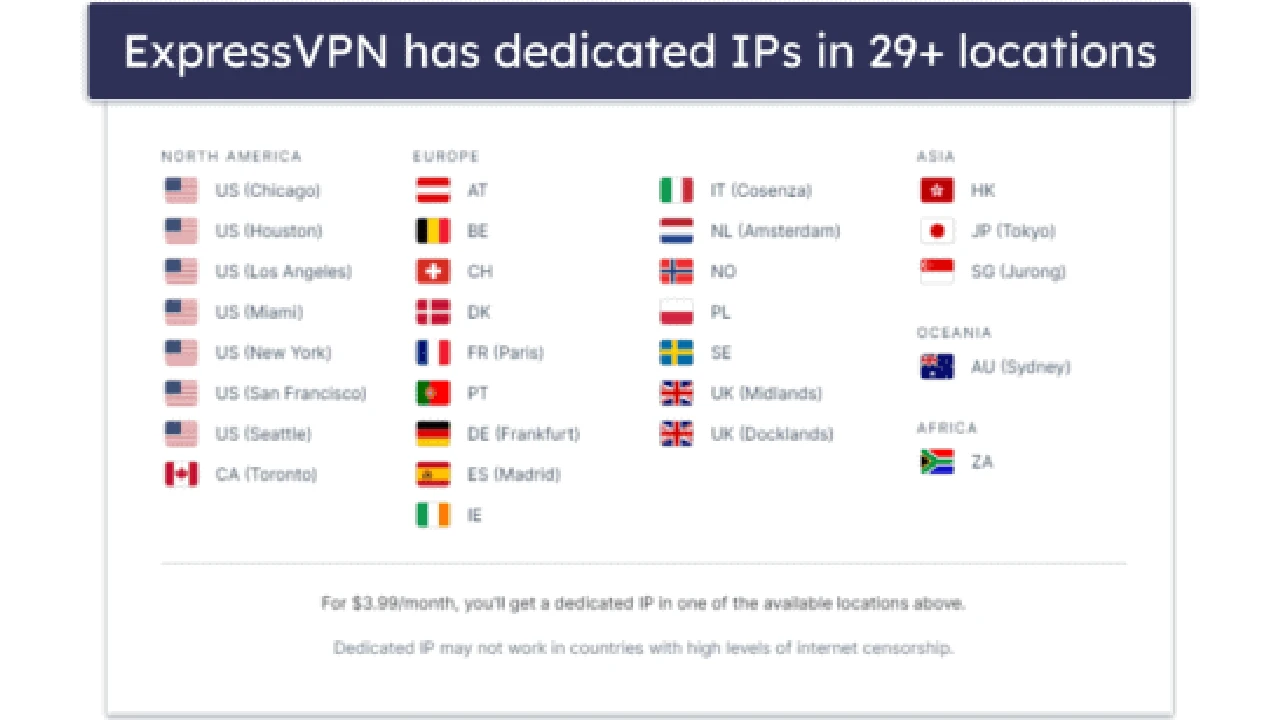
ExpressVPN boasts a massive network of over 3,000 servers in 105 countries. This extensive reach is a huge advantage for both US and Southeast Asian users. For the USA, they have servers in numerous cities across the country, ensuring low latency and access to various regional content. For Southeast Asia, ExpressVPN has a strong presence with servers in Singapore, Malaysia, Thailand, Indonesia, Vietnam, Philippines, Hong Kong, and more. Their servers are known for their speed and reliability, making them excellent for streaming and gaming. ExpressVPN also uses RAM-only servers across its entire network, reinforcing its no-logs commitment. Their proprietary Lightway protocol further enhances speed and security.
- Server Count: 3,000+ servers
- Countries: 105 countries
- Key Features: RAM-only servers, Lightway protocol, strong encryption, excellent for streaming.
- Pricing: Typically starts around $6.67/month for a 12-month plan, with a 30-day money-back guarantee.
- Use Case: Ideal for users in the USA and Southeast Asia who prioritize speed, global access to content, and robust privacy features.
NordVPN A Feature-Rich Network with Specialized Servers
NordVPN offers an even larger network with over 6,000 servers in 61 countries. While the country count is slightly lower than ExpressVPN, their server density is impressive. NordVPN excels with its specialized servers, including Double VPN (multi-hop), Obfuscated servers (for bypassing censorship), P2P servers, and Onion Over VPN. For US users, they have thousands of servers across many states, ensuring fast connections. In Southeast Asia, NordVPN has a solid footprint with servers in Singapore, Vietnam, Indonesia, Malaysia, Thailand, and more. Their NordLynx protocol (based on WireGuard) provides excellent speeds. NordVPN also operates RAM-only servers.
- Server Count: 6,000+ servers
- Countries: 61 countries
- Key Features: RAM-only servers, NordLynx protocol, Double VPN, Obfuscated servers, Threat Protection.
- Pricing: Often starts around $3.99/month for a 2-year plan, with a 30-day money-back guarantee.
- Use Case: Great for users in the USA and Southeast Asia who need advanced security features, specialized servers for specific tasks (like torrenting or bypassing strict censorship), and good speeds.
Surfshark Unlimited Connections and a Growing Network
Surfshark provides a network of over 3,200 servers in 100 countries, making it another strong contender for global coverage. One of its standout features is unlimited simultaneous connections, meaning you can protect all your devices and even share with family members without extra cost. For US users, Surfshark has servers in numerous cities, offering good speed and access. In Southeast Asia, they have servers in Singapore, Malaysia, Thailand, Indonesia, Vietnam, Philippines, and more. Surfshark also uses RAM-only servers and supports WireGuard for fast connections. Their CleanWeb feature blocks ads, trackers, and malware.
- Server Count: 3,200+ servers
- Countries: 100 countries
- Key Features: Unlimited simultaneous connections, RAM-only servers, WireGuard support, CleanWeb ad blocker, MultiHop.
- Pricing: Can be as low as $2.29/month for a 2-year plan, with a 30-day money-back guarantee.
- Use Case: Excellent for families or individuals with many devices, offering broad global access and good speeds at a very competitive price point for both USA and Southeast Asia.
CyberGhost User-Friendly with a Massive Server Fleet
CyberGhost boasts one of the largest server networks, with over 11,000 servers in 100 countries. This massive fleet helps reduce congestion and ensures a wide range of IP addresses. CyberGhost is particularly user-friendly, offering dedicated servers optimized for streaming, gaming, and torrenting, making it easy to find the best server for your needs. For US users, they have thousands of servers across many states. In Southeast Asia, CyberGhost has a significant presence with servers in Singapore, Malaysia, Thailand, Indonesia, Vietnam, and more. They offer strong encryption and a strict no-logs policy.
- Server Count: 11,000+ servers
- Countries: 100 countries
- Key Features: Dedicated streaming/gaming/torrenting servers, user-friendly apps, strong encryption, 7 simultaneous connections.
- Pricing: Often around $2.19/month for a 2-year plan, with a generous 45-day money-back guarantee.
- Use Case: Ideal for beginners and users who want a vast selection of servers, especially for streaming and gaming, with good coverage in both the USA and Southeast Asia.
Private Internet Access (PIA) Extensive US Coverage and Customization
PIA has a huge server network, with servers in 91 countries. While they don't publicly disclose the exact number of individual servers, it's known to be in the tens of thousands, making it one of the largest. PIA is particularly strong in the USA, with servers in all 50 states, offering unparalleled regional access and low latency for US-based users. For Southeast Asia, they have servers in Singapore, Malaysia, Thailand, Indonesia, and more. PIA is highly customizable, appealing to more advanced users who want fine-grained control over their VPN settings. They offer strong encryption and a proven no-logs policy in court.
- Server Count: Tens of thousands of servers
- Countries: 91 countries
- Key Features: Servers in all 50 US states, highly customizable, strong encryption, MACE ad blocker.
- Pricing: Can be as low as $2.03/month for a 3-year plan, with a 30-day money-back guarantee.
- Use Case: Best for US users needing extensive regional coverage, and advanced users in both regions who appreciate customization and a proven no-logs policy.
Choosing the Right VPN Network for Your Needs
When selecting a VPN, don't just look at the headline features. Dig into their server network details. Here's what to consider:
- Your Location: If you're in the USA, ensure the VPN has plenty of servers across different states. If you're in Southeast Asia, look for strong coverage in countries like Singapore, Malaysia, Thailand, Indonesia, and Vietnam.
- Your Destination: Where do you want to access content from? Make sure the VPN has servers in those specific countries or regions.
- Your Activities: For streaming and gaming, prioritize VPNs with high-bandwidth servers and low latency. For privacy, look for RAM-only servers and a strong no-logs policy. For bypassing censorship, seek out obfuscated or stealth servers.
- Server Count vs. Distribution: A high server count is good, but a good geographical distribution is often more important for specific use cases.
- Transparency: Reputable VPNs are transparent about their server network, including the use of virtual servers.
Ultimately, the best VPN server network is one that meets your specific needs for speed, access, and security. Take advantage of money-back guarantees to test out different providers and see how their networks perform for you in your specific location and for your intended uses. Happy browsing!
:max_bytes(150000):strip_icc()/277019-baked-pork-chops-with-cream-of-mushroom-soup-DDMFS-beauty-4x3-BG-7505-5762b731cf30447d9cbbbbbf387beafa.jpg)